
The Rare Hat Problem in Bongo Cat: Probability, Repetition, and the Limits of Grinding
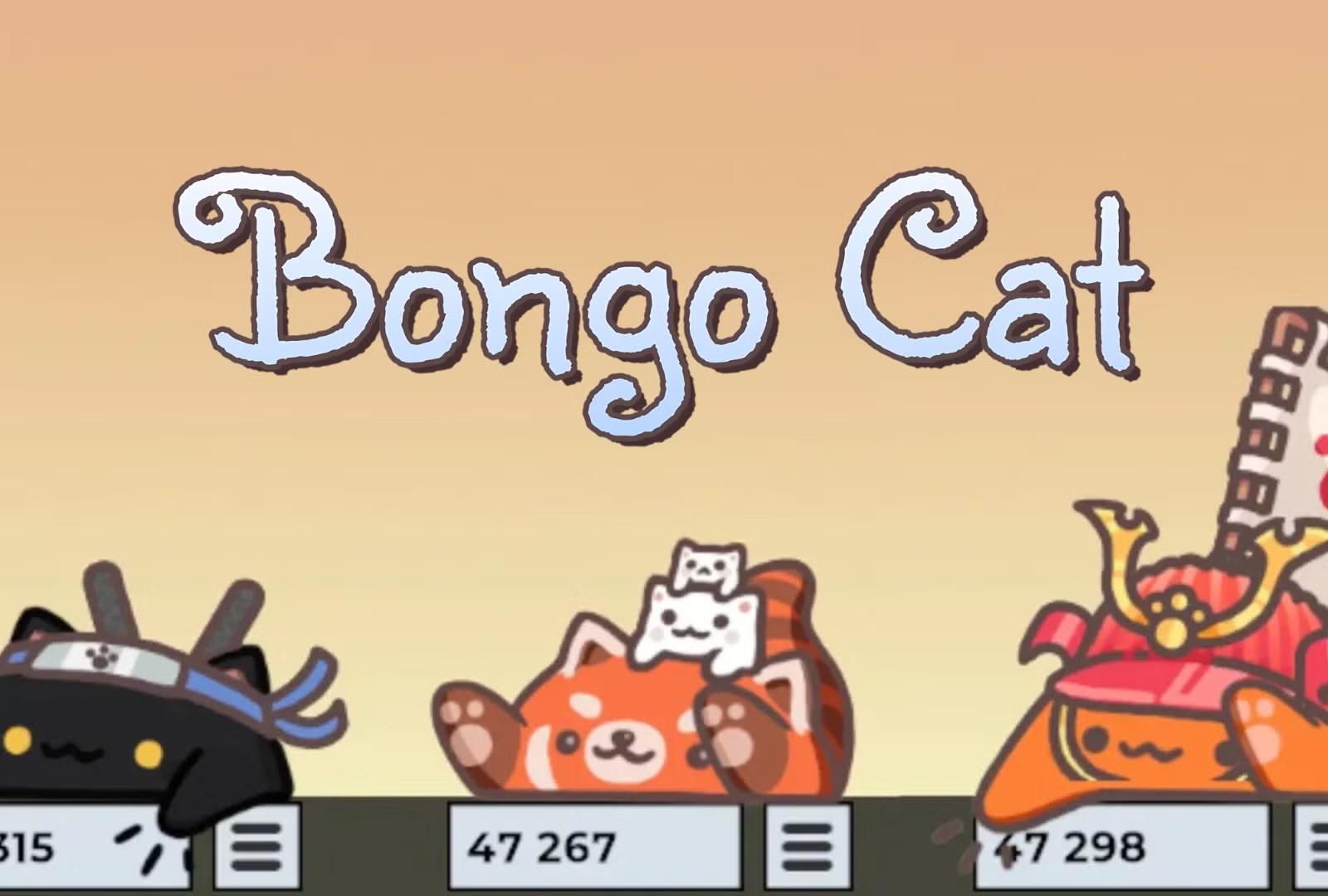
Bongo Cat’s central appeal is also the source of one of its most persistent frustrations. The little cat reacts when you type or click, while the game turns ordinary computer use into progress toward collectible cosmetics. That makes earning a hat feel effortless at first: keep the game open, go about your day, and see what turns up. The trouble begins when a player wants a particular rare item. Then a cheerful desktop companion can start to look like a probability problem with no clear finish line.
This article focuses on that specific issue: why rare-hat hunting can feel so slow, why more typing does not necessarily mean better odds, and how duplicate items and market prices complicate the chase. The key is to separate what the game visibly rewards from what players may assume it rewards. Bongo Cat’s Steam page describes the input-reactive cat and publishes item-drop chances, but those details do not make a rare drop predictable.
1. The First Clicks Create the Wrong Expectation
When Bongo Cat first appears on the desktop, its feedback is immediate. Press a key or click, and the cat responds by bopping the taskbar. The connection between action and animation is clear, and that clarity encourages a natural assumption: if each input produces a reaction, then doing more inputs must be the direct route to more valuable rewards. It is an understandable conclusion, but it can confuse visible activity with a particular item’s probability.
That difference matters because the game’s most satisfying response is not necessarily the same thing as a cosmetic drop. The animation confirms that Bongo Cat has registered an input; it does not promise a new hat, much less a rare one. The official Steam description invites players to type, click, work, and play to collect points, and lists rarity chances for the item pool. It does not promise that a specific kind of activity, such as rapid clicking, improves the odds of a particular item.
2. What the Game Shows, and What It Does Not Promise
The most useful starting point is to read the reward system narrowly. The Steam page presents Bongo Cat as a companion that reacts to keys and clicks, and it gives a set of item rarity chances. Those are two separate pieces of information: inputs animate the cat and support collection, while the listed probabilities describe the rarity categories. Neither statement, by itself, says that typing faster changes the rarity distribution.
That does not mean players should assume they know every detail of the current drop implementation. A game can change through updates, and an item pool can be presented differently in the client than on a store page. The careful position is to distinguish documented facts from theories. Unless the current game interface or an official update says that a bonus applies, claims such as “clicking rapidly boosts legendary odds” should be treated as unverified, not as a reliable strategy.
3. Common Drops Make the System Feel Generous
A frequent common item can make the opening stretch feel rewarding. The player sees a steady stream of discoveries, learns how to customize the cat, and starts to imagine that collecting the whole set is simply a matter of keeping the game running. That feeling is not false: common items do create visible progress. But it can also set expectations that do not hold once the collection narrows to rarer categories.
The Steam page lists these chances: Common at 90%, Uncommon at 9.5%, Rare at 0.49%, Epic at 0.01%, and Legendary at 1 in 500,000. These are the figures shown on the page, and they illustrate why the early rhythm can change sharply as a player focuses on higher rarities. A common result may be unsurprising; a legendary result, if those displayed odds apply to the relevant roll, is exceptionally unlikely.
4. Why “One More Drop” Is Not a Schedule
A probability is not a countdown. If a player receives several ordinary items in a row, that history does not establish that a rare item is now due. Each new attempt can still produce another common result. This is the central trap in rare-hat grinding: the mind treats past misses as credit toward a future hit, even when the game has not described a pity system or a guaranteed reward after a fixed number of attempts.
The same reasoning applies in reverse. A rare reward appearing early does not prove that the system has secretly rewarded a particular play style. It may simply be a fortunate outcome. Without an explicit published rule, a player cannot infer a hidden meter, a streak bonus, or a “bad luck protection” threshold from a small number of drops. One person’s short wait and another person’s long wait can both happen under a random system without either experience revealing the underlying odds.
5. Why More Typing May Not Mean Better Odds
Bongo Cat’s novelty comes from making routine computer use visible: the cat reacts while its owner works, chats, browses, or plays. That design makes it easy to think of inputs as a lever for controlling the reward system. Yet the difference between earning ordinary progress and modifying the chance of a rare item is important. More activity may produce more counted actions or more points, depending on the game’s current rules, but it does not automatically improve the rarity of an individual reward.
This is why frantic key pressing is a poor response to a disappointing drop. It can make the companion busier on screen without making the rare outcome more likely per roll. If the game has a separate point system, inputs may still help build that resource; if it uses a drop chance independent of input speed, extra presses do not change that chance. The responsible approach is to check what the current game actually says about the reward being pursued, rather than treating animation intensity as evidence of better odds.
6. The Displayed Odds Need Careful Reading
There is a detail on the Steam listing worth noticing: the displayed rarity figures do not read like a neatly normalized set of mutually exclusive percentages. The first four percentages add up to 100%, while a separate “Legendary” figure is also listed as 1 in 500,000. Players should not casually add or compare these numbers as if the page were a complete, internally explained probability table. The store listing is useful, but it does not spell out every implementation detail behind the figures.
That is not proof that the game is broken or that the odds are deceptive. It is a reason to be precise about what can be concluded from the available information. The page gives published values, but a player trying to calculate a precise expected wait needs to know how those categories are rolled, whether the figures are current, and whether they describe the same pool in the same way. For a practical collector, the safest interpretation is that rare outcomes are meant to be scarce, while exact forecasting requires clearer current documentation.
7. Duplicates Change the Meaning of Progress
A duplicate is emotionally different from a new item. If the collection is small, a repeat can feel like proof that the system has stalled. But duplicates are a normal possibility in a collection driven by chance, especially when the reward pool contains items the player already owns. The important question is not merely “Did I get something?” but “Does this result move my collection, my trading options, or my enjoyment forward?”
That distinction helps prevent an unhelpful cycle: receive a duplicate, feel that the session was wasted, and immediately keep playing in an attempt to recover the time. The game may still have delivered an item, but it did not deliver the one the player wanted. A collector can decide to keep playing for the fun of seeing the cat react, or stop because the next attempt has no special guarantee. Treating duplicates as part of the system, rather than as a temporary debt the game owes you, makes the chase easier to judge calmly.
8. Trading and Market Prices Are Not a Guaranteed Shortcut
When a game has tradable or marketable cosmetics, players may see buying or trading as a way around random drops. That can be a sensible alternative for a specific item, but it shifts the problem from probability to cost and availability. A rare cosmetic might be listed at a price the player considers too high, or there might be few listings. A displayed market price can also change, so it is not a permanent measure of the item’s value.
The choice is therefore not simply “grind for free” versus “buy instantly.” It is a decision about time, money, and what the player finds enjoyable. Before using the Steam Community Market, check the exact item, the current listing, and the platform’s transaction details; do not assume a price seen in an old post is still accurate. If trading is available for the item, compare that route with continued play—but set a limit in advance. A cosmetic is optional, and no rare hat is worth turning a casual desktop game into a source of financial pressure.
9. A Better Way to Set Up a Rare-Hat Chase
The healthiest approach is to make the game’s role clear before a session begins. If Bongo Cat is a companion while you are already using your computer, let it stay a companion. If you are deliberately pursuing cosmetics, decide how much time you are willing to spend and what would count as a satisfying result. This stops the uncertain drop system from quietly redefining an ordinary work session as an endless farming session.
A simple checklist can make that decision concrete:
- Check the current in-game information before relying on a drop rule or probability.
- Decide whether you want any new cosmetic or one specific rare item.
- Set a time or spending limit before you begin.
- Treat a rare drop as luck, not as proof that a technique works.
- Stop when the process is no longer enjoyable.
These are not ways to improve the odds. They are ways to keep the odds from controlling the player. The difference is important: a strategy can organize your time without pretending to influence randomness.
10. What Completion Really Means in Bongo Cat
A collection can provide a satisfying long-term goal, but “complete” is not always a stable destination in a game built around cosmetics. The item pool may change, new items may appear, and a player’s definition of completion may shift from owning all common hats to chasing one particular rarity. If the goal keeps moving, the player can spend far more time and effort than they originally intended without ever reaching a clear endpoint.
For that reason, the most useful measure of progress is not a promise to own every rare item. It is whether Bongo Cat is still doing what made it appealing: adding a small, playful response to ordinary computer use. If collecting hats remains fun, keep collecting. If the rare-drop chase has become a repetitive demand for “just one more,” pause and reassess. The game’s randomness can make a long hunt possible, but it cannot decide for you whether that hunt is worth continuing.
Conclusion
Rare-hat hunting in Bongo Cat is difficult for a specific reason: the visible relationship between typing, clicking, and the cat’s reaction makes the reward system feel more controllable than the published information warrants. The Steam page lists rarity chances, but those figures do not promise that rapid inputs improve rare-item odds, that a rare drop is due after a streak of misses, or that every player will see the same results. Duplicates and changing market prices add further uncertainty.
The practical answer is not a secret clicking technique. It is to separate what the game documents from what players speculate, decide how much time or money the chase deserves, and treat every rare result as uncertain. Bongo Cat works best as a playful companion with a collection attached—not as a task that must be completed at any cost.