THE INVENTORY CRISIS: THE STRUGGLE FOR ITEM IDENTITY IN DIABLO IV
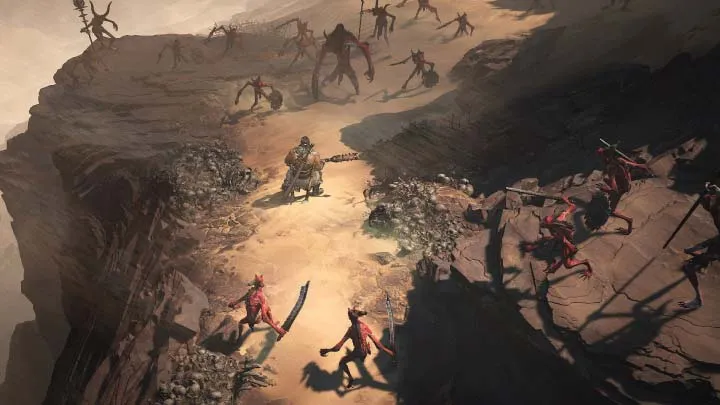
The soul of any Diablo game is its loot. In the early days of the franchise, seeing a "Gold" or "Green" item drop was a moment of pure dopamine; you knew exactly what that item represented. In Diablo IV, that clarity has been replaced by a system where an item is merely a "Vessel" for a separate mechanical component called an Aspect. This has led to a specific issue where players spend more time in town comparing spreadsheets of percentages than they do in dungeons slaying demons.
This article analyzes the evolution of this itemization friction, the impact of the "Aspect Library" on character progression, and how the introduction of new crafting layers like "Masterworking" and "Tempering" has paradoxically made the search for the "Perfect Item" more exhausting than rewarding. We will break down the components of this crisis using a logical framework to understand why the current system feels like a "Job" rather than a "Joy."
The Death of the Iconic Unique
In previous iterations, items like The Grandfather or Shako carried a weight of legend. In Diablo IV, the "Legendary" tier has become the new "Rare," dropping in such abundance that they have lost their luster. The specific issue is that these items are no longer "Whole." A Legendary item is just a yellow item with a "Legendary Aspect" imprinted on it. This creates a mechanical dissonance where the item's physical identity (a sword, a ring, a helm) is secondary to the text box of the Aspect it carries.
This "De-valuation" of items means that players no longer look for "The Sword of a Thousand Truths"; they look for "A sword with a high item power level so I can put my 'Spinning Blades' aspect on it." This turns the world’s treasures into raw materials, stripping the game of its sense of discovery. The loot becomes a commodity rather than a trophy, leading to a "Growth Mindset" that is focused on math rather than myth.
The Aspect Bloat and the Storage Nightmare
The "Aspect" system was designed to give players flexibility, but it resulted in a logistical disaster. For much of the game's lifecycle, players had to store individual Aspects in their limited chest space. This created a "Negative Status" where the game's difficulty was not the monsters, but the inventory management. Even with the move toward a "Codex of Power" library, the sheer volume of available Aspects makes "Build Experimentation" feel like a daunting chore.
Because there are hundreds of Aspects, and many are "Build-Defining," players feel a constant "Pressure to Hoard." You cannot simply throw away an item because it might have a "Max Roll" on an Aspect you might need for a different build ten levels from now. This "Hoarding Stress" is the antithesis of the fast-paced, visceral combat the game promotes, creating a "Structural Friction" that slows the game's momentum to a crawl.
The Inventory Checklist:
- Item Power Level: The first hurdle that renders 99% of loot irrelevant.
- Affix Synergy: Checking if three out of four lines of text match your build's specific math.
- Aspect Roll: Checking if the legendary power is at its maximum potential.
Tempering: The Double-Edged Sword of Crafting
To address the "Boring Item" problem, Vessel of Hatred and previous seasons introduced "Tempering." This allows players to add specific powerful stats to an item. However, the specific issue here is the "Brick" mechanic. You have a limited number of "Rerolls" to get the stat you need. If you fail, the item—which you might have spent days hunting for—becomes "Bricked" and effectively useless.
This creates a "Loss Aversion" psychology that is incredibly punishing. Instead of the crafting system being a way to "Grow" your item, it feels like a "Gamble" where the stakes are your time. When a player "Bricks" a 3-star Greater Affix item, the emotional response is not "I need to play more," but "I want to quit." This mechanical "Root" is too rigid, causing a "Fracture" in the player's commitment to the endgame grind.
The Greater Affix Chase and Statistical Noise
Diablo IV introduced "Greater Affixes" (GA) to make high-level loot feel special again. These are items where one or more stats are guaranteed to be 50% stronger. While this provides a clear "Goal," it highlights the "Statistical Noise" of the rest of the game. Once you reach a certain level, any item that is not a Greater Affix item is effectively "Trash."
The issue is the "Binary Nature" of the loot. You are either looking for a "1-in-a-million" drop, or you are salvaging everything else. This removes the "Incremental Progression" that makes RPGs satisfying. There are no "Good Enough" items in the late game; there is only "Perfect" or "Garbage." This creates a "Status" of constant disappointment, where the player ignores 99.9% of the items on the ground, making the "Lord of Hatred" theme feel a bit too literal for the player's mood.
The Codex of Power: A Library of Complexity
The shift to the Codex of Power—where salvaging a legendary upgrades its permanent version in your library—was a massive quality-of-life improvement. However, it revealed a new "Component" issue: "Numerical Overload." A player now has to track the "Rank" of hundreds of aspects.
This changes the "Gốc" (Root) of the gameplay from "Finding Loot" to "Leveling a Library." The item on the ground is no longer a tool; it is a "XP Bar" for a menu. This abstraction makes the world feel "Thin." You aren't finding a legendary shield; you are finding "+2% to the shield menu." This "Menu-fication" of the Diablo experience is a specific issue that distances the player from the dark, gothic world of Sanctuary.
Aspect Management Challenges:
- Visual Confusion: Many Aspect icons look identical, requiring the player to read every tooltip.
- Resource Scarcity: Upgrading the Codex requires high-tier materials that drop from repetitive activities.
- Build Rigidity: Once an Aspect is "Maxed," the player feels "Locked" into that build because switching would mean starting the math process over for a different skill tree.
Masterworking: The Infinite Resource Sink
Masterworking is the final layer of item progression, allowing players to upgrade an item's stats twelve times. Every four levels, a random stat gets a massive boost. This is "Tree Thinking" at its most punishing. If the "Wrong" stat gets the boost, the "Optimal" player resets the item to level zero and starts again.
This creates a "Resource Bottleneck." To Masterwork, you must run "The Pit" or "Infernal Hordes" hundreds of times. This repetitive loop is not about "Challenge," but about "Resource Accumulation." It turns the game into a "Time-Vampire" where the "Goal" is to see a specific number turn "Blue" or "Yellow" on a character sheet. It’s a "Mechanical Lease" that the player pays in hours of their life for a 5% increase in "Critical Strike Damage."
The "Damage on Tuesdays" Affix Problem
Diablo IV launched with a "Component" problem often mocked by the community: overly specific "Conditional Stats." Examples include "Damage to Distant Enemies," "Damage to Crowded Controlled Enemies," or "Damage while Healthy." While many of these have been consolidated, the legacy of "Conditional Math" remains.
The specific issue is "Invisibility of Power." If my character does "+50% Damage to Burning Enemies," I cannot easily "Feel" that power until I check a spreadsheet or watch a slow-motion video. This makes the combat feel "Floaty" because the damage output is dependent on a dozen "Invisible Triggers" rather than the "Weight" of the weapon. A "Great Item" should make you feel stronger immediately; it shouldn't require a calculus degree to verify.
Class Balance and the "One-Build" Gravity
Because the itemization system is so rigid and dependent on "Perfect Aspects," class balance becomes a "Specific Issue." If one Aspect for the Barbarian is "Broken" (overpowered), every Barbarian player is forced to use it to stay competitive in the "Pit."
This creates "Build Gravity." Instead of a "Growth Mindset" where players explore the "Branches and Leaves" of the skill tree, they are "Sucked" into the "Root" of the meta. Deviating from the "Perfect Item" list means your character will simply stop functioning in high-tier content. The "Choice" is an illusion; you either play the "Solved" build or you hit a "Hard Wall" in progression.
Narrative Dissonance: Scavenging in the Apocalypse
There is a "Dissonance" between the "Vessel of Hatred" narrative—where Neyrelle is struggling with the soul of Mephisto—and the player’s reality of "Inventory Management." While the world is ending and the "Lord of Hatred" is rising, the "Hero of Sanctuary" is standing in town, sighing because their boots don't have enough "Movement Speed" and their "Tempering" rerolls are gone.
This "Status" of being a "Stat-Janitor" undermines the "Dark Fantasy" tone. The game wants you to feel like a desperate survivor, but the mechanics want you to be a "Supply Chain Manager." This conflict between the "Gốc" (Root) of the story and the "Lá" (Leaves) of the gameplay creates a sense of "Apathy" toward the world. The loot is so disconnected from the lore that the items feel like they were made in a factory rather than forged in Hell.
Conclusion: The Path Back to Sanctuary
In conclusion, Diablo IV: Vessel of Hatred is a visually stunning, mechanically tight action game that is currently struggling with its own weight. The specific issue of "Itemization Friction"—from the "Brick" of Tempering to the "Bloat" of the Aspect system—has turned the hunt for gear into a series of bureaucratic steps.
To reclaim its crown as the king of ARPGs, the game must return to a philosophy of "Clarity over Complexity." An item should be a "Whole" thing, a trophy that tells a story, not just a "Vessel" for math. Until the "Root" of the item system is simplified, players will continue to spend more time staring at menus than they do staring into the eyes of the Lord of Hatred. The "Adventure" is currently buried under a pile of "Inventory Chores," and it's time for Blizzard to "Salvage" the fun.