.webp)
The Physics of Sibling Co-dependence: Analyzing the Momentum and Spatial Coordination Crisis in Dino Bros
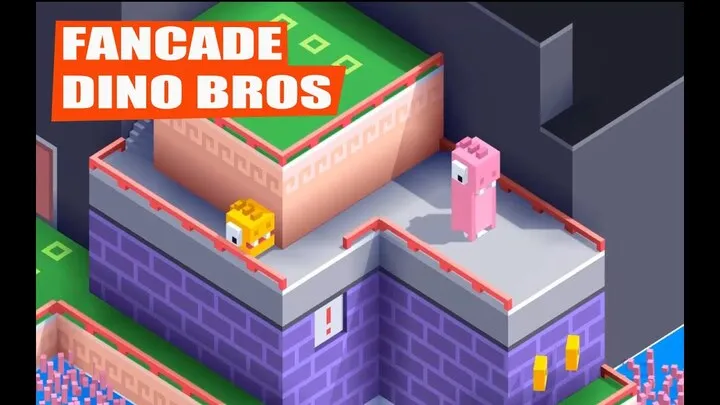
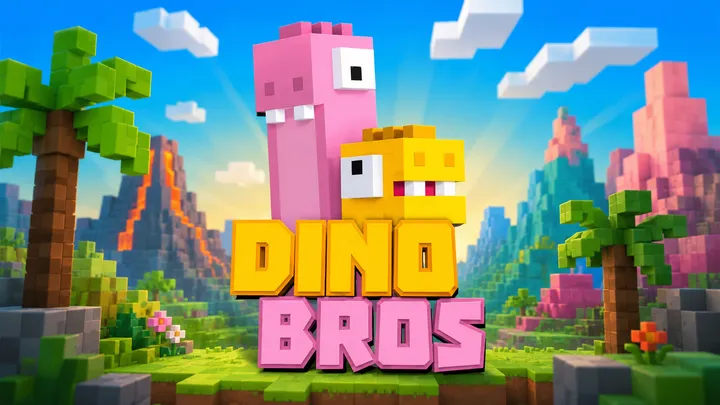
Dino Bros has captured a unique niche within the puzzle-platforming community by introducing a gameplay engine built entirely around asynchronous dual-character control. Unlike cooperative platformers where two players share the burden of mechanical execution, Dino Bros forces a single user to navigate two distinct dinosaur protagonists simultaneously through increasingly hostile environments. The core structural issue that defines—and often threatens to destabilize—this gameplay loop is the intense crisis of momentum management and spatial synchronization. Players do not simply fight the hazards on the screen; they fight the internal physics engine that links the movement vectors of the two dinosaurs, turning every simple jump into a high-stakes calculation of spatial co-dependence.
This article provides a deep, mechanical analysis of this specific spatial-coordination issue in Dino Bros. We will explore how the differing physical weights, horizontal velocities, and jump arcs of the two main characters interact with complex environmental obstacles over the course of a standard game progression. By diving deep into the kinetic rules of the game, the structural bottlenecks of late-game level design, and the psychological strain of managing dual-focus inputs, we uncover how Dino Bros transforms basic momentum preservation into a stressful yet deeply rewarding architectural puzzle.
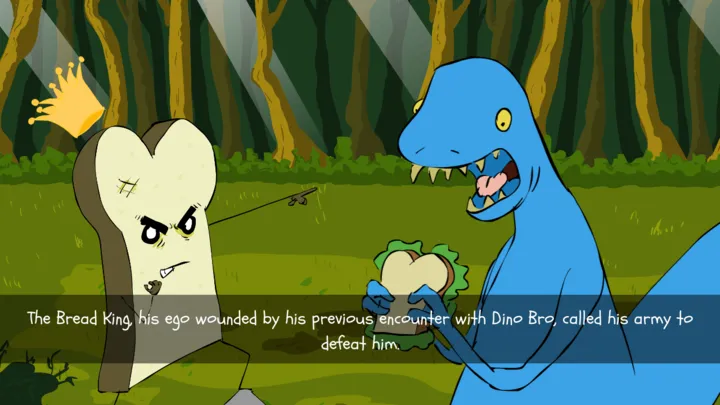
1. The Mechanics of Dual Trajectories: Understanding the Asymmetric Engine
At the absolute center of the Dino Bros mechanical dilemma is the foundational asymmetry built directly into the two playable characters. While they share identical movement commands from the player's controller inputs, they do not possess identical physical attributes. The larger sibling possesses a significantly higher mass value within the game's physics calculation, resulting in slower acceleration speeds but immensely higher downward force and environmental impact. The smaller sibling acts as a high-velocity projectile, featuring rapid initial acceleration and a floaty jump arc that easily clears large horizontal voids.
The specific strategic issue arises because the controller inputs affect both characters simultaneously unless one is manually anchored by a level mechanic or environmental block. When a player presses the jump button, both dinosaurs launch into the air, but their resulting airborne trajectories immediately diverge due to their asymmetric mass values. This structural design choice ensures that every single movement command sends the two characters into completely different spatial coordinates, creating an immediate and continuous state of spatial friction that the player must constantly correct by utilizing local terrain features.
2. The Early-Game Desynchronization: How Simple Jumps Fractured Team Alignment
During the initial chapters of Dino Bros, the game introduces players to basic platforming layouts designed to teach the fundamentals of safety and navigation. However, even within these introductory levels, the core momentum issue begins to manifest during basic linear jump sequences. A player attempting to clear a standard pit will naturally focus their eyes on the leading dinosaur. If the smaller brother is in front, his rapid movement velocity allows him to clear the pit with ease, but the simultaneous input forces the larger, heavier brother to jump prematurely from a suboptimal position, often sending him plunging directly into the hazard below.
To mitigate this early-game desynchronization crisis, players must learn the tactical art of "Micro-Buffering." This advanced technique involves intentionally running the leading dinosaur into a solid wall or a small vertical lip to completely halt its forward momentum. By keeping the faster sibling pinned against a physical obstacle, the player can safely hold the forward movement input, allowing the slower, heavier brother to catch up and close the physical distance between them. Only when both dinosaurs are perfectly stacked against the same vertical boundary can a synchronized jump be executed without the risk of an unrecoverable structural split.
3. The Leverage of Weight: Utilizing the Heavy Sibling as a Spatial Anchor
As the campaign progresses into its second major phase, the environmental design shifts from simple flat platforms to interactive physics puzzles that demand the weaponization of the larger brother's mass. The heavy sibling is uniquely capable of depressing heavy floor switches, shattering fragile stone floors, and shifting movable blocks that the smaller brother cannot alter. This creates a fascinating tactical dynamic where the heavy brother must act as a physical anchor to dictate the pacing and spatial layout of the room.
When navigating these mid-game trials, high-level strategy dictates using a method known as "Asynchronous Parking." Players must intentionally maneuver the heavy brother into a recessed floor pocket or behind a heavy environmental barrier that naturally absorbs his momentum. Once the heavy brother is safely anchored against the terrain, the player can utilize short, rapid directional taps to guide the high-mobility smaller brother through tight hazard gauntlets without accidentally pulling the heavy brother off his required switch or platform location.
4. The Tethering Dilemma: Managing Camera Pan Limits and Screen Splits
One of the most unforgiving constraints within the Dino Bros gameplay engine is the rigid camera anchoring system. The game screen does not utilize a traditional split-screen layout when the characters separate; instead, it features a dynamic single-camera system that attempts to keep both protagonists within the active field of view. As the two dinosaurs move further apart on the horizontal axis, the camera lens pans backward to maximize visual space, but it eventually hits a hard structural boundary limit.
Once this camera threshold is reached, the trailing dinosaur is violently pulled along by the screen's edge, completely overriding its standard physics attributes and causing it to glide unpredictably across the terrain. This "Screen Drag" phenomenon introduces an immense layer of instability to the platforming equations. If the smaller brother sprints too far ahead while navigating a delicate obstacle course, the resulting camera shift can instantly drag the heavy brother off a safe ledge and drop him directly into a bed of spikes, forcing a complete level restart due to poor spatial tracking.
5. Mid-Game Momentum Transfer: Mastering Seesaw Platforms and Kinetic Launches
The mid-game levels introduce a complex array of kinetic platform types, specifically focusing on seesaw structures and counter-weighted elevators. These objects require the player to precisely calculate the exact momentum transfer generated by dropping the heavy brother from a specific altitude to launch the smaller brother into distant, hidden chambers. This requires a complete cognitive shift: players must stop viewing the characters as separate units and start viewing them as two halves of a single, continuous kinetic circuit.
To execute a successful "Kinetic Launch," the player must navigate the smaller brother onto the elevated edge of a seesaw platform, completely halt his movement inputs, and then guide the heavy brother to drop from a high vertical ledge onto the opposing, lowered side of the beam. The resulting transfer of kinetic force propels the smaller brother upward with immense velocity. The mechanical challenge is that the player must instantly switch their visual focus to the flying smaller brother the exact millisecond the launch occurs, executing precise mid-air adjustments to guide his volatile trajectory into a safe landing zone.
6. Environmental Friction: Navigating Ice Surfaces and Reducing Slide Variables
The introduction of the winter-themed biomes introduces a devastating variable to the game's movement equation: reduced surface friction. On icy platforms, the momentum retention values of both dinosaurs are amplified exponentially. The heavy brother takes significantly longer to come to a complete stop once he builds up forward speed, while the smaller brother loses almost all traction, sliding uncontrollably across narrow ledges upon landing from a standard jump.
Tactical Ice Control Rules:
- The Counter-Input Brake: Tap the opposite directional button immediately upon landing to artificially induce friction and cut the sliding animation short.
- The Stacked Slide: Force the smaller brother to land directly behind the heavy brother, using the larger dinosaur's massive frame as a physical backstop to absorb the sliding velocity.
- Short-Hop Optimization: Avoid max-height jumps completely on icy terrain; use low-altitude short hops to minimize downward kinetic energy and reduce post-landing slide distance.
7. Late-Game Chrono Hazards: Synchronizing Movement with Falling Debris
In the final third of the campaign, the structural issue of spatial coordination is pushed to its absolute limits by the introduction of collapsing environments and time-sensitive hazards. Levels feature falling stalactites, crumbling stone pillars, and rising lava floors that force the player into a state of constant, forward acceleration. The luxury of stopping to buffer momentum or align the two characters against a wall is completely stripped away by the design engine.
This phase of the game introduces the intense "Dual-Focus Bottleneck." The player must read two separate sections of the screen simultaneously: they must scan the upper boundaries to track the trajectories of incoming falling hazards while analyzing the floor layout to ensure both dinosaurs are landing on secure platforms. Success in these late-game environments requires a highly disciplined rhythmic movement style, where the player utilizes alternating tapping sequences to keep both characters moving in a tight, parallel wave formation through the falling debris.
8. Advanced Input Layering: The Art of the Asynchronous Air-Dive
As players enter the final boss domains, the platforming requirements evolve from simple spatial tracking to advanced mechanical manipulation known as "Input Layering." This involves exploiting the microscopic frames of animation latency between the two characters' jumps. By initiating a jump input and instantly following it with a directional tilt and a character-specific secondary action, elite players can force the two siblings to perform completely different movement styles in mid-air.
The most critical iteration of this technique is the Asynchronous Air-Dive. During a large horizontal gap crossed by moving laser barriers, the player must jump both characters simultaneously. While in mid-air, the player must utilize a rapid flick-and-release motion on the analog stick. This motion utilizes the floaty air-time of the smaller brother to keep him safely hovering above a laser beam, while forcing the heavier brother to rapidly dive downward beneath a secondary obstacle, effectively splitting their vertical alignment while maintaining their parallel horizontal progression.
9. The Late-Game Crisis: Overcoming the Teleportation and Portal Desync
The final level sets introduce spatial portals that instantly teleport a character from one quadrant of the map to another. These portals do not function on a shared group mechanic; if the leading brother steps into a portal, he is instantly translated to a new location, while the trailing brother remains in the original zone. This splits the camera focus entirely and creates a massive cognitive rupture for the player.
When a character teleports, the camera system aggressively snaps to the new destination zone to track the leading brother, completely blinding the player to the immediate hazards surrounding the trailing brother who is still navigating the original space. To conquer these portal rooms, players must internalize the exact layout of the blind zone. You must blindly execute the required movement inputs for the trailing brother based entirely on memory and internal rhythm, guiding him into the portal entry frame while your visual focus is locked onto the newly arrived sibling across the map.
10. Cognitive Load Management: Psychological Strategies for Dual-Character Mastery
The ultimate hurdle to achieving 100% completion in Dino Bros is managing the intense psychological strain and cognitive overload caused by the dual-control architecture. Human visual attention is naturally optimized for single-target tracking. Forcing the brain to process two distinct physics systems operating on separate spatial vectors simultaneously induces rapid mental fatigue and input panic, leading to catastrophic button-mashing errors during high-stress platforming gauntlets.
To overcome this psychological barrier, elite players utilize a visual technique called Gaze Centering. Instead of constantly flicking your eyes back and forth between the two dinosaurs, you must train your vision to lock onto the exact midpoint void between them. By treating the space between the brothers as your primary anchor point, you can utilize your peripheral vision to track both characters simultaneously. This drastically reduces cognitive load, allowing you to read incoming environmental hazards and process momentum adjustments with fluid, instinctual precision.
Conclusion
Dino Bros stands as a brilliant masterclass in architectural puzzle-platforming design, built entirely upon the volatile physics of asymmetric co-dependence. By systematically tracing the evolution of this spatial crisis—from the early desynchronization of basic jumps to the brutal cognitive load of late-game portal rooms and kinetic launches—we discover that the game’s true depth lies in its subversion of traditional platforming safety. Success is not achieved by mastering a single character's hitboxes; it is achieved by internalizing the invisible kinetic tether that binds the two siblings together. Once you learn to respect their differing masses, manage the screen boundaries, and treat the duo as a single interconnected circuit, the chaotic frustration of the dual engine transforms into a beautifully synchronized ballet of momentum and movement mastery.