
Marvel Snap: The Ultimate Hot Game Guide on How to Master Card Battles

Marvel Snap is a fast-paced digital card game that brings iconic Marvel superheroes and villains into exciting strategic battles. Developed by Second Dinner and published in partnership with Marvel, the game challenges players to build powerful decks, predict their opponents' moves, and compete for control of different locations. With short matches and countless card combinations, Marvel Snap has become a hot game for mobile players who enjoy tactical decisions and competitive gameplay.
Whether you are a beginner discovering your first cards or an experienced player looking to improve your win rate, understanding the game's mechanics can give you a significant advantage. From building balanced decks to mastering location effects and managing the Snap mechanic, this guide covers the essential strategies you need to become a stronger Marvel Snap player.
1. Discovering the Origins of Marvel Snap
Marvel Snap combines the recognizable characters of the Marvel universe with an accessible but surprisingly deep card-battling system. Instead of long matches with complicated turns, players compete across three locations in quick games that reward careful planning.
Its distinctive design makes every match feel different.
- Marvel characters: Collect heroes and villains with unique abilities.
- Three-location battles: Compete to control the majority of locations.
- Fast matches: Make important decisions in just a few minutes.
- Strategic deck building: Combine cards to create powerful synergies.
These features have helped Marvel Snap stand out as a hot game for players who want competitive strategy in a mobile-friendly format.
2. Understanding the Basic Gameplay
The main objective in Marvel Snap is to win at least two of the three locations by the end of the match. Players use energy each turn to play cards, and the total power at each location determines who controls it.
Learning how power and energy interact is the first step toward consistent victories.
- Energy management: Each turn provides a limited amount of energy to spend on cards.
- Card power: Cards contribute power to the locations where they are played.
- Location control: Winning two locations is usually enough to win the match.
- Turn planning: Think ahead about which cards you can play on later turns.
A strong player does not simply play the highest-power card available. Instead, they consider how each move affects the entire board.

3. Building a Strong and Balanced Deck
Your deck determines how you approach every match. A good deck should have a clear strategy rather than relying on a random collection of powerful cards.
As you collect more cards, experiment with combinations that support a consistent game plan.
- Choose a central strategy: Build around a specific mechanic, such as ongoing effects, reveal effects, movement, or card destruction.
- Balance energy costs: Include cards that can be played effectively at different stages of the match.
- Create card synergies: Look for abilities that strengthen one another.
- Avoid unnecessary complexity: A focused deck is often easier to learn and improve than one with several unrelated strategies.
In this hot game, understanding why your cards work together is often more important than owning every powerful card.
4. Mastering the Three Locations
Locations are one of the most distinctive features of Marvel Snap. Each match introduces different effects that can change where cards may be played, how much power they provide, or what happens during a turn.
Adapting to these effects is essential for success.
- Read every location: Understand its effect before committing important cards.
- Identify favorable positions: Some locations naturally support particular deck strategies.
- Keep your options open: Avoid filling every available space too early.
- Use location effects creatively: Certain effects can turn an ordinary card into a powerful tactical play.
A location that initially seems disadvantageous may become an opportunity if you understand how to exploit its rules.
5. Managing Energy and Planning Each Turn
Energy management is central to Marvel Snap's strategy. Every card has an energy cost, so the order in which you play cards can determine whether your final turns are effective.
Planning several turns ahead helps prevent wasted opportunities.
- Understand your energy curve: Make sure your deck has useful plays across different turns.
- Consider future combinations: Save key cards for turns when their abilities have the greatest impact.
- Avoid wasting energy unnecessarily: Look for efficient plays that support your overall strategy.
- Plan alternative moves: Unexpected locations or opponent actions may require a different approach.
The best move is not always the one that produces the most immediate power. Sometimes, setting up a stronger final turn is the smarter decision.
6. Learning Card Abilities and Synergies
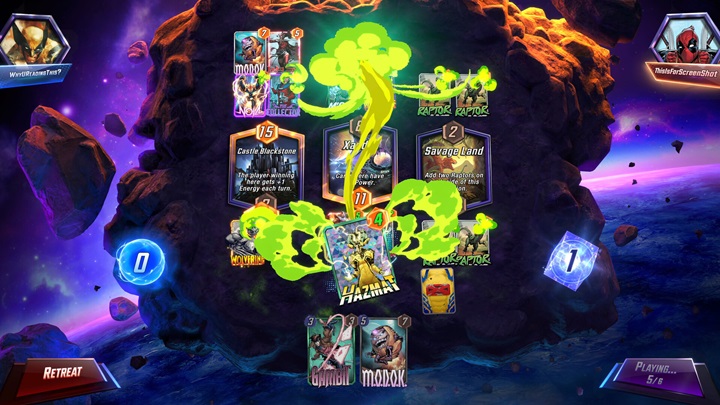
Marvel Snap features a wide variety of card abilities. Some cards activate when revealed, while others provide continuous effects or interact with cards already on the board.
Understanding these interactions allows you to discover powerful combinations.
- On Reveal effects: Trigger abilities when a card is revealed.
- Ongoing effects: Provide benefits while the relevant conditions remain active.
- Movement strategies: Relocate cards to take advantage of different board positions.
- Destruction strategies: Trigger benefits by destroying specific cards.
- Support combinations: Use cards that increase power, reduce costs, or improve other cards.
Study how abilities interact instead of evaluating each card independently. A card with modest power can become essential when it supports your deck's main strategy.
7. Using the Snap Mechanic Wisely
The Snap mechanic adds an extra layer of risk and reward. Players can increase the stakes of a match when they believe they have a strong chance of winning, but doing so without a reliable plan can lead to costly losses.
Knowing when to Snap or retreat is a major competitive skill.
- Snap when your position is favorable: Consider your hand, board, locations, and likely opponent responses.
- Recognize uncertainty: A promising opening does not guarantee a winning finish.
- Retreat when necessary: Leaving a match can limit losses when your position becomes unfavorable.
- Watch your opponent's behavior: Their decisions may reveal confidence, hesitation, or a potential counterstrategy.
Successful players manage risk as carefully as they manage cards. In this hot game, protecting your progress can be just as important as securing a big victory.
8. Developing Advanced Competitive Strategies
As you gain experience, opponents become more difficult to predict. Advanced play requires understanding common deck archetypes, anticipating counterplays, and deciding when to reveal your strategy.
Small decisions can have a major impact on the outcome.
- Predict opponent combinations: Consider which cards they are likely to play next.
- Manage board space: Avoid filling locations that your strategy still needs.
- Preserve surprise: Keep important combinations hidden when possible.
- Recognize counterplay: Identify cards or locations that could disrupt your plan.
- Calculate final power: Estimate whether your remaining plays can realistically secure two locations.
Instead of focusing only on your own cards, think about the possible moves available to your opponent. This habit helps transform basic gameplay into deliberate strategic competition.
9. Progressing Through Missions and Game Modes
Marvel Snap provides different ways to earn rewards, collect cards, and test your skills. Daily missions and seasonal activities can help you progress while offering new objectives beyond individual matches.
Choose activities that support your current goals.
- Complete daily missions: Earn available rewards by meeting mission requirements.
- Advance your collection: Unlock cards and improve your deck-building options.
- Explore competitive modes: Test your strategies against stronger opponents as you become more confident.
- Participate in seasonal content: Take advantage of available challenges and rewards.
- Review new cards: Consider how newly acquired cards might improve your existing decks.
You do not need to win every match to make progress. Completing objectives and learning from difficult games can still help you develop as a player.
10. Improving Through Practice and Adaptation
Marvel Snap rewards players who continually refine their strategies. The best deck for one situation may struggle against a different opponent or a new set of locations, so flexibility is essential.
Consistent practice helps you recognize patterns and make better decisions under pressure.
- Review your losses: Identify whether a mistake came from deck construction, timing, or risk management.
- Experiment with card replacements: Test one change at a time to understand its effect.
- Learn from experienced players: Explore different deck archetypes and strategic approaches.
- Track your results: Notice which matchups are difficult and adjust accordingly.
- Stay adaptable: Reconsider your strategy when the competitive environment changes.
Over time, these habits can help you build stronger decks, predict opponents more effectively, and improve your overall performance.
Conclusion
Marvel Snap delivers a compelling combination of fast card battles, iconic Marvel characters, unpredictable locations, and meaningful strategic decisions. Its simple rules make it easy to begin playing, while deck synergies and the Snap mechanic provide plenty of depth for experienced competitors.
To improve, focus on building a coherent deck, managing energy efficiently, adapting to locations, and learning when to increase the stakes or retreat. With thoughtful planning and consistent practice, you can develop your skills and enjoy everything this hot game has to offer.